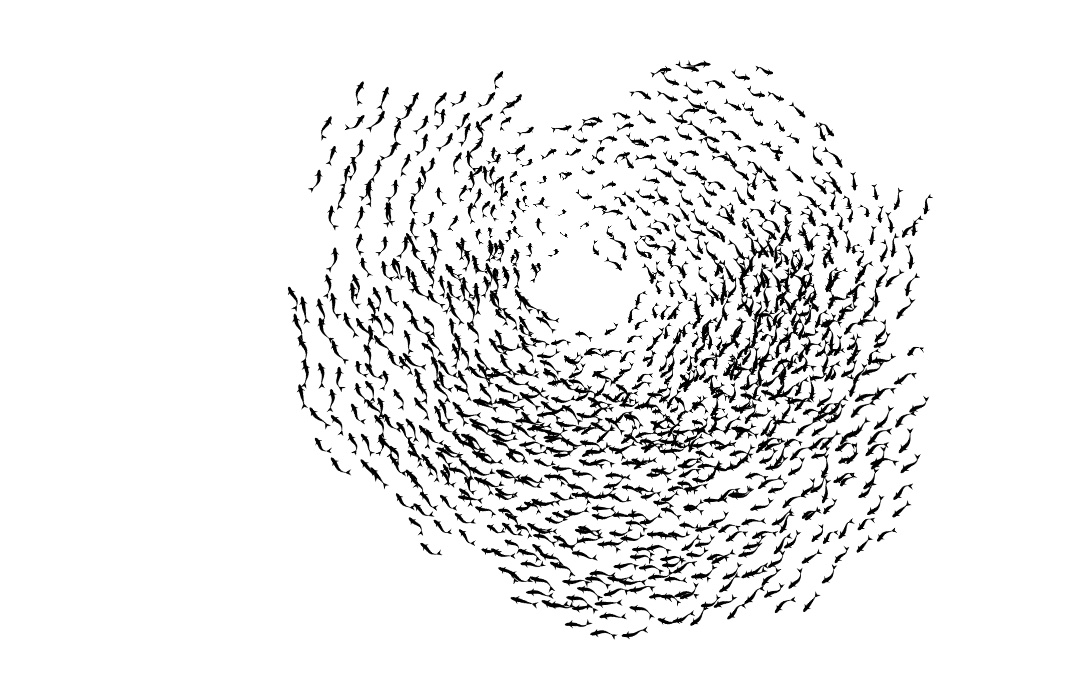
About a thousand fish with no leader: each one watches only its seven nearest neighbors. When the mouse startles a few, the fear spreads on as a wave.
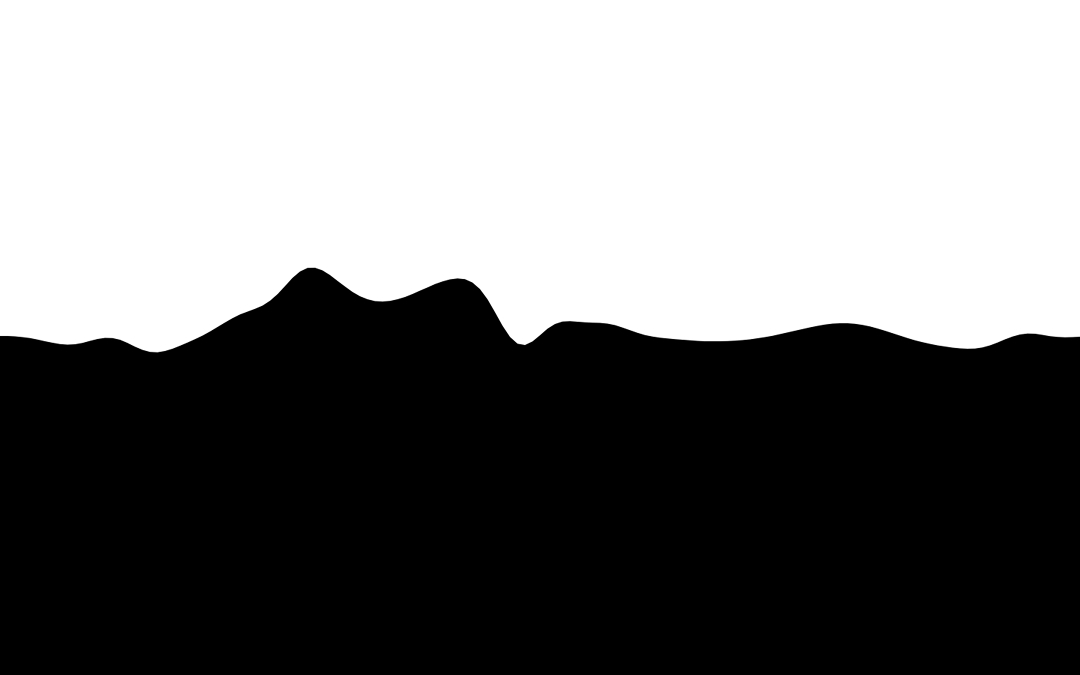
A wave equation over a chain of points, each knowing only its two neighbors. At rest, the simulation sleeps as in a game engine and costs no processing time.
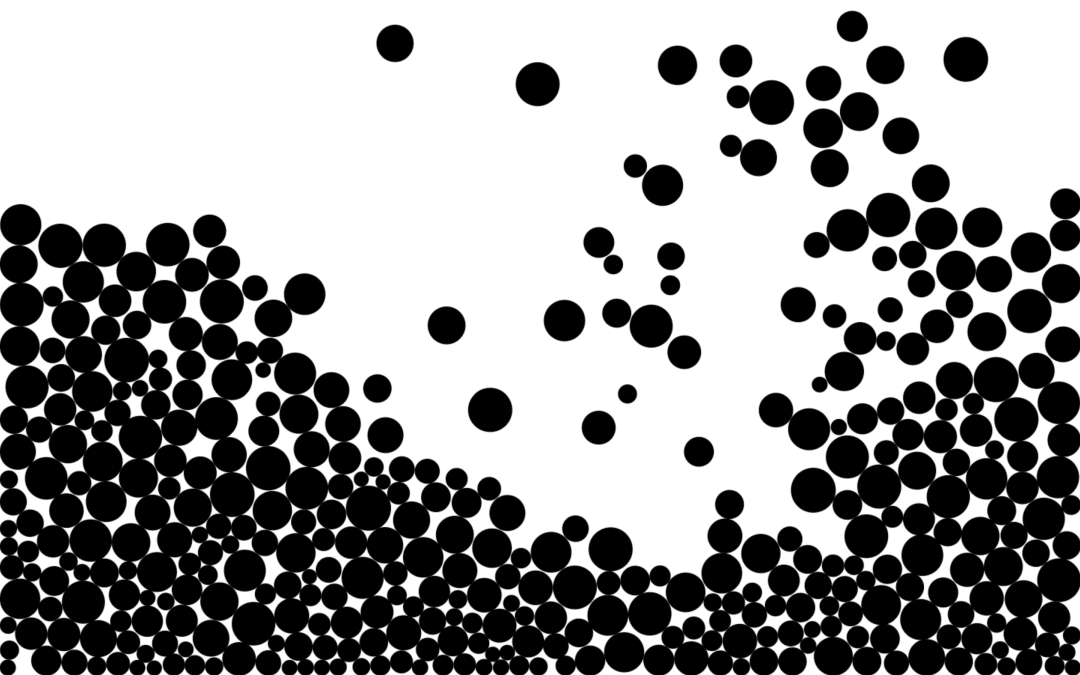
Custom physics without an off-the-shelf library: the screen is divided into cells, and each circle checks only the circles near it instead of all the others. That keeps it smooth even with hundreds of circles.
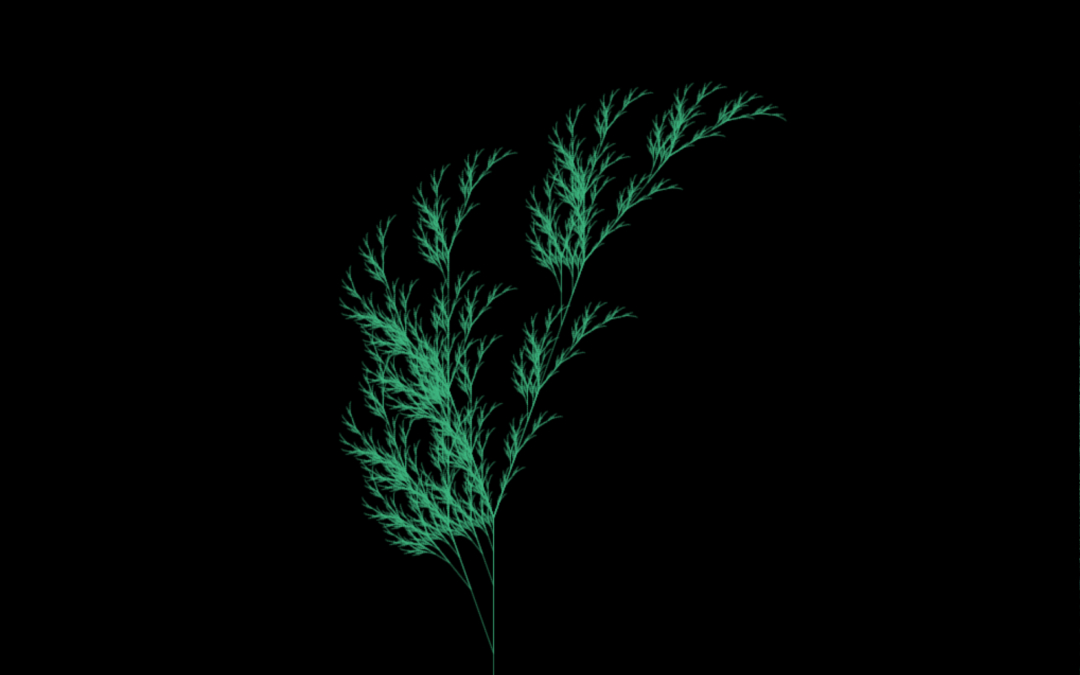
Growth by rules, as in real plants: two simple rules, applied seven times in a row, yield 24,384 line segments. An imaginary pen traces them and draws the fern.
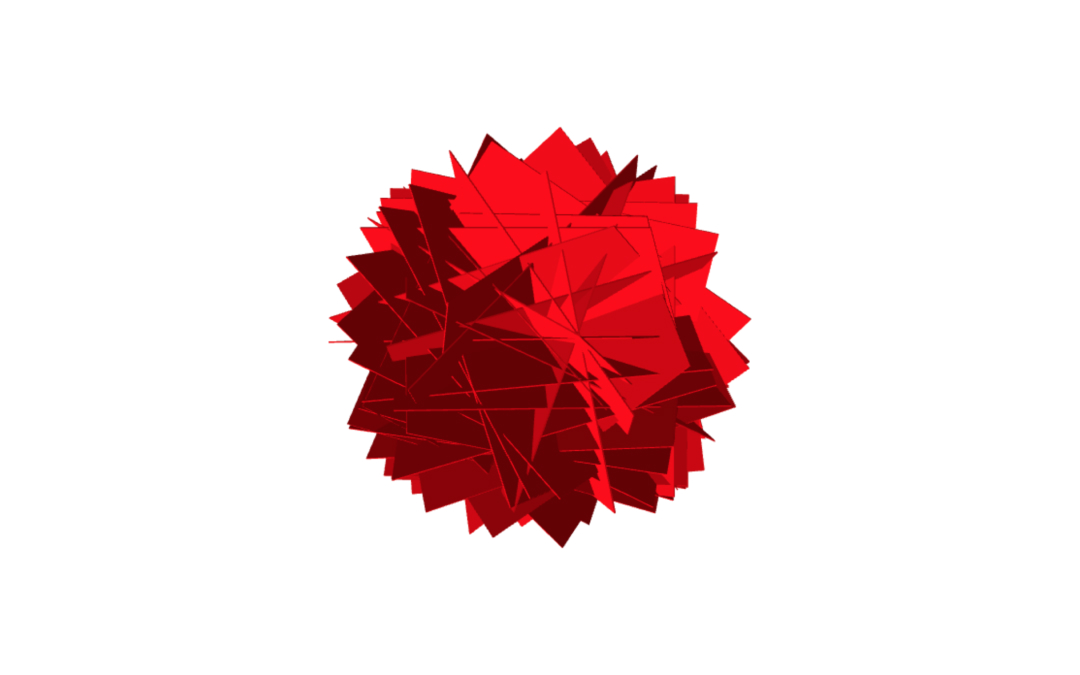
40 boxes drawn directly on the graphics card, each with its own rotation axes and speed. Their size follows the mouse smoothly; holding the button orbits the camera.
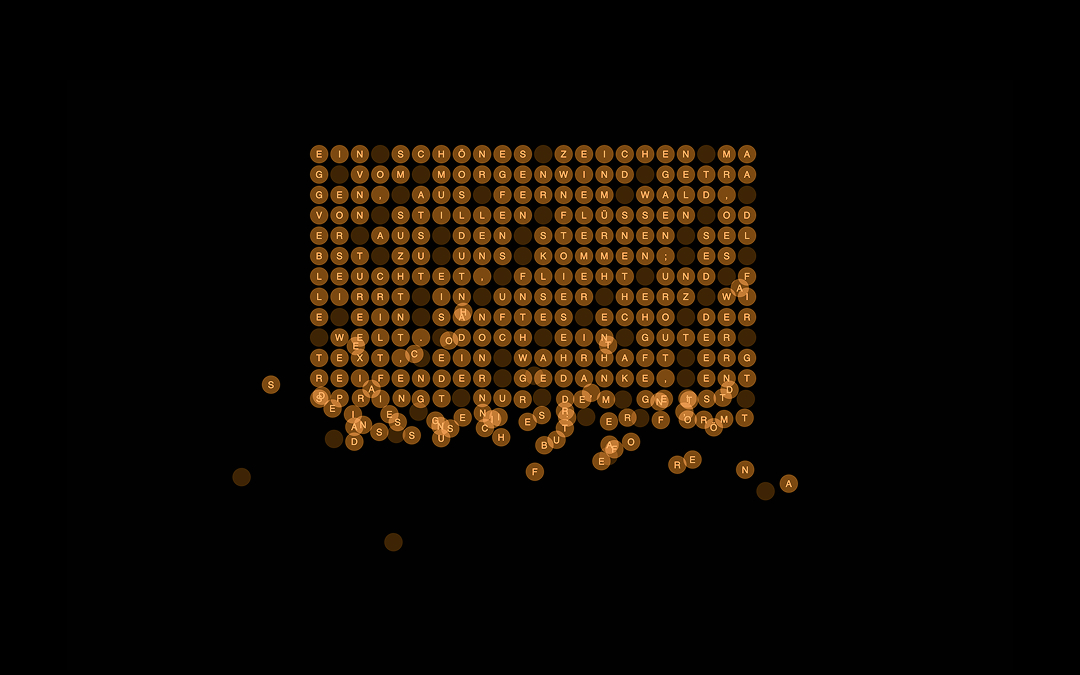
The order in which the grid fills up is calculated once in advance. Each circle covers seven percent of its remaining distance per frame and eases in smoothly.
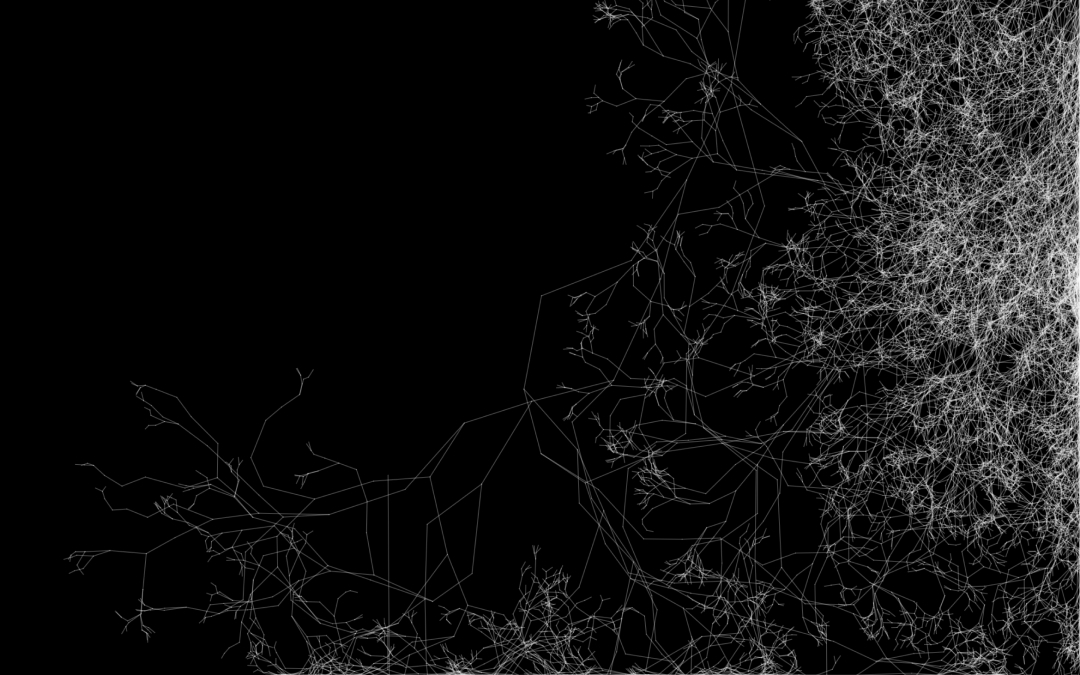
Finished lines are stored as a snapshot; only what is still growing gets calculated – a technique from game development. That is why a million lines run as smoothly as 20,000.
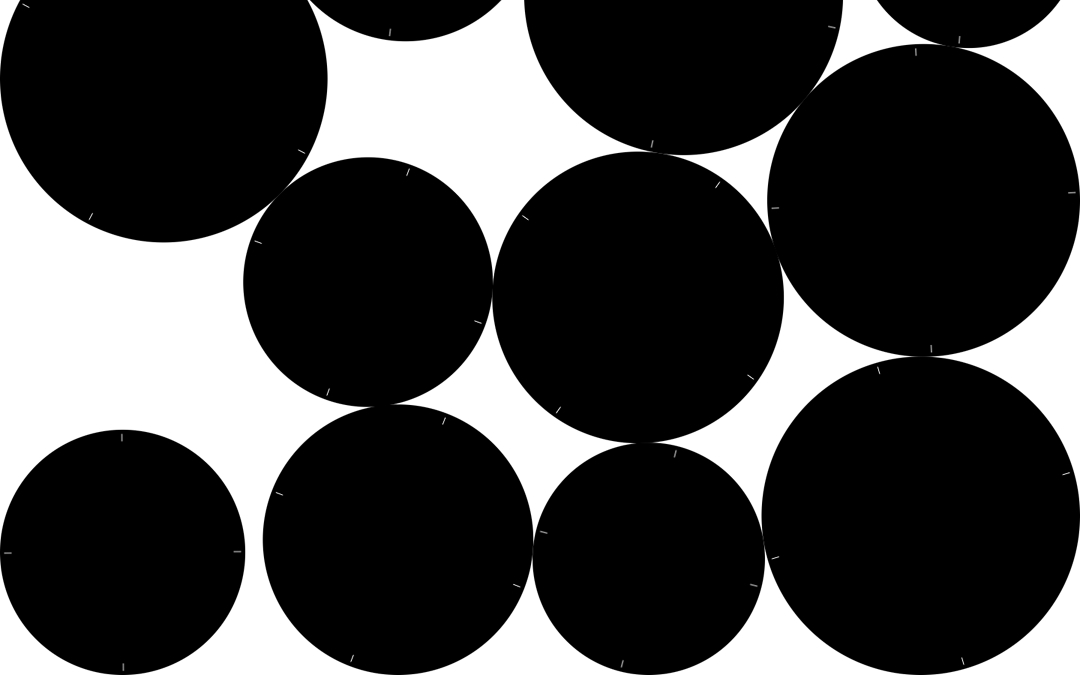
Custom physics with rotation: friction at the contact points sets the balls rolling. When little is moving, the simulation automatically uses fewer steps.
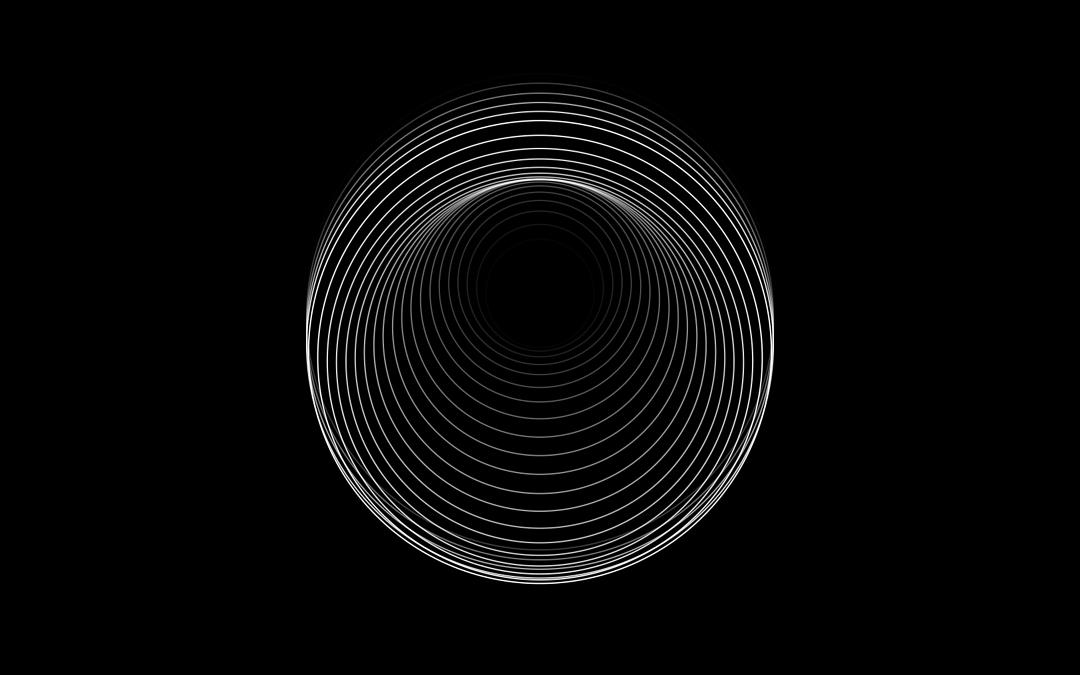
Each ring's size and brightness follow from its age alone – so it runs at the same speed on every screen. The sense of depth comes from a simple sine curve; the whole piece is 85 lines of code.
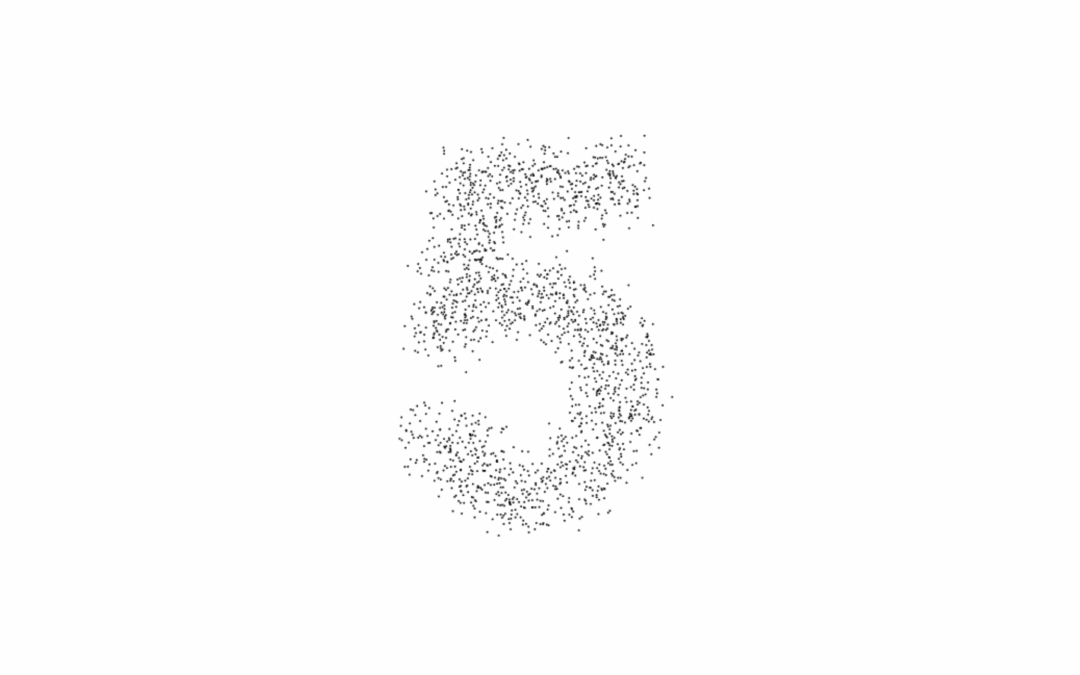
Each digit is drawn invisibly once at startup and broken down into dust. After that only points are moved, and as soon as everything stands still, nothing more is drawn.
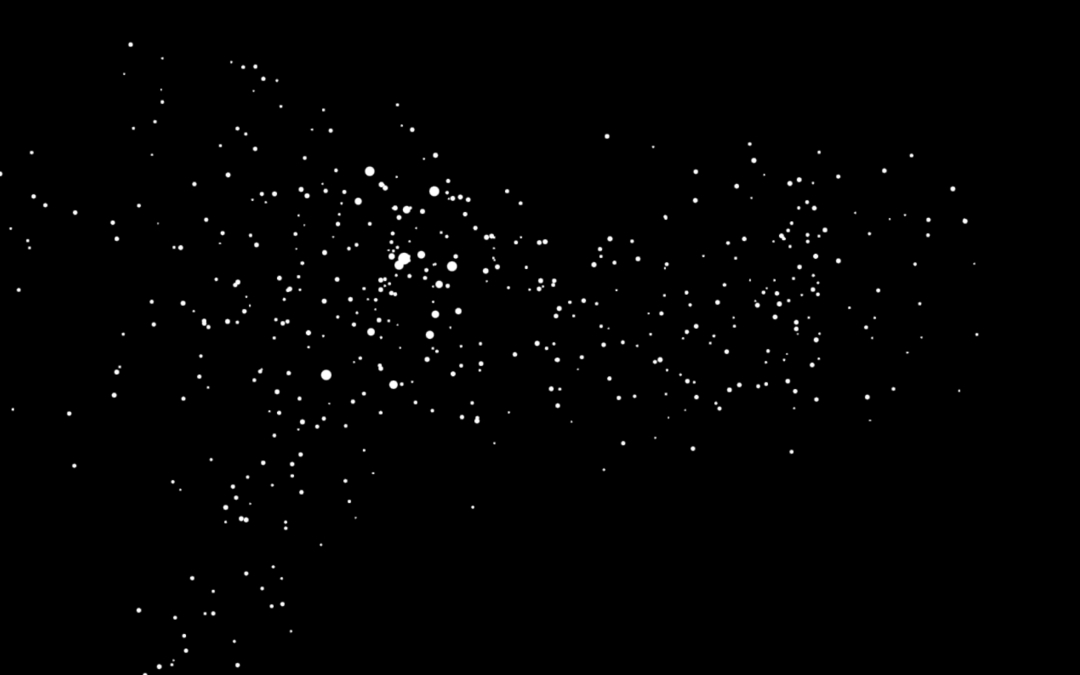
Each point knows only when it was born. From that it works out whether it is flying, waiting, pulsing or falling – without a single timer.
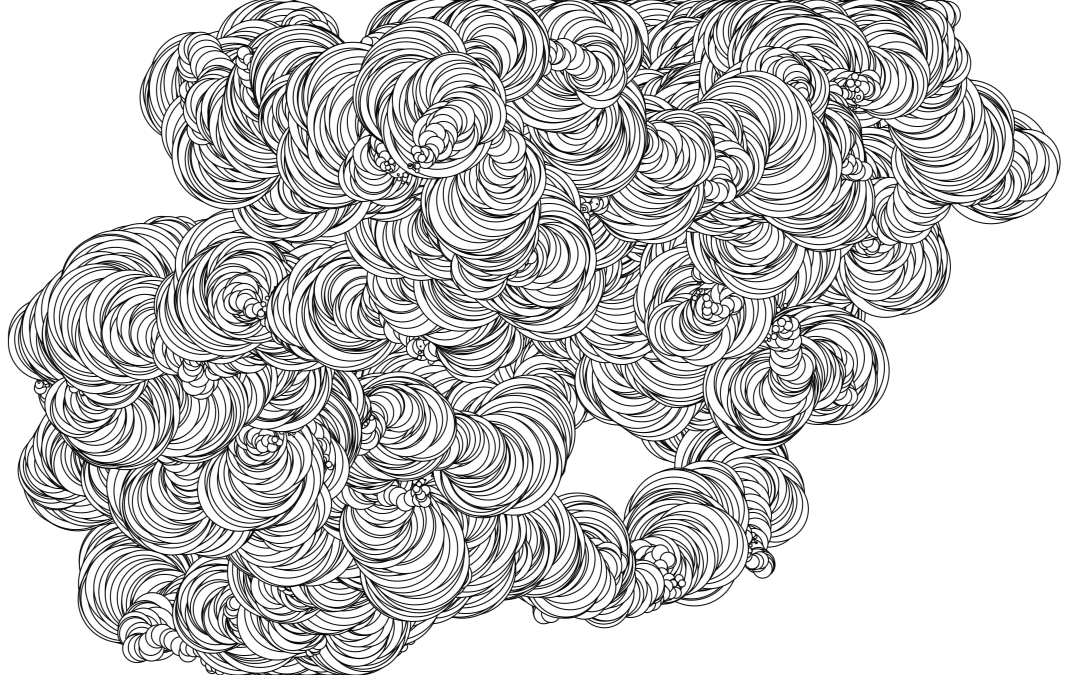
A random walk of 50,000 circles whose size swings between 0 and 100 pixels. Drawing happens in batches of 200 circles per frame; once the cloud is complete, the program stops computing.